Lymphatic Drainage: What It Is and How to Do It at Home
Lymphatic drainage at home is everywhere right now: dry brushing, gua sha, jade rollers, vibration plates, “de-puffing” routines all over social media. Before you add another tool to your routine, let’s actually talk about what this does. And, honestly, what it doesn’t.
What Is Lymphatic Drainage, Really?
Okay, quick and painless version. Your lymphatic system is basically your body’s drainage system. It moves fluid around and eventually dumps it back into your bloodstream. It’s a real part of how your immune system works too.
Here’s the thing though: unlike your heart, nothing is actively pumping this fluid along. It just kind of relies on you. Moving around, breathing, using your muscles, that’s what keeps it flowing, and that’s the whole idea behind doing lymphatic drainage at home in the first place.
Which is probably why “sluggish lymph” became a whole wellness buzzword. If you’re not moving much, this system genuinely can get a little backed up.
Does Lymphatic Drainage Actually Work? The Honest Answer
I’m not going to oversell this to you.
The research is mixed, not miraculous. A pilot study published on PubMed found gua sha caused a fourfold increase in microcirculation at the treated area, though that’s about local blood flow, not proof of a full lymphatic “detox.” Dry brushing has even less research behind it, if we’re being honest. We know it’s good for circulation and skin in general, but the lymph-specific claims are shakier.
What both of these seem to actually do is help move fluid that’s built up in your tissues. That’s probably why you notice less puffiness after. It’s not magic, it’s just physically nudging stuff along.
What they won’t do is replace the boring stuff that actually keeps your lymph system healthy. Moving your body, drinking water, sleeping enough, and not eating in a way that keeps you inflamed still matter most. Bottom line: these tools are a nice add-on to lymphatic drainage at home, not a substitute for the unglamorous basics.
How to Do Lymphatic Drainage at Home
Dry Brushing
Grab a stiff, natural-bristle brush and use it on completely dry skin, right before you shower. Brush in long strokes toward your heart, up your legs, in toward your chest from your arms. Light pressure is all you need, you’re not exfoliating a callus.
Gua Sha
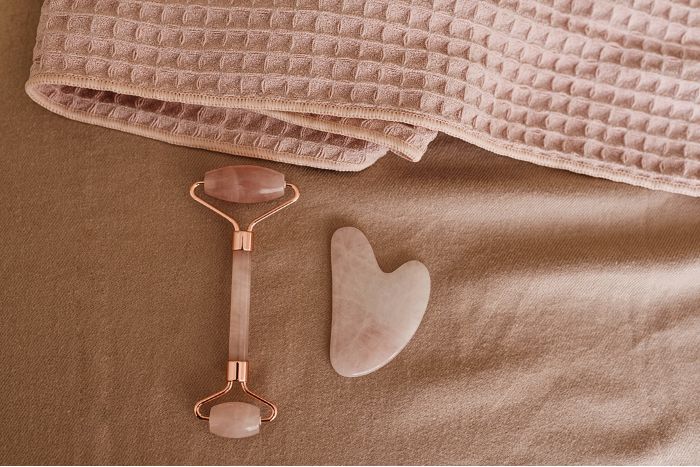
Put some facial oil on first so the tool actually glides instead of dragging. Direction matters more than people think. You want to move outward and downward, toward your lymph nodes. On your face, that’s generally out toward your ears, then down your neck toward your collarbone.
A lot of tutorials online get this backwards, for what it’s worth. Wrong direction basically works against you.
Keep the pressure light. Your lymph vessels sit right under your skin, so pressing harder doesn’t get you a better result. It just presses harder.
Vibration Plates
This one’s a little different. Instead of brushing or scraping, you just stand on it. The plate vibrates rapidly underneath you, which triggers tiny, repeated muscle contractions throughout your body. Since muscle movement is one of the main things that actually pushes lymph fluid along, this can genuinely help.
There’s even a small 2020 study on this specifically, published on PubMed. In women with a related condition called lipedema, pairing low-frequency vibrotherapy with manual lymphatic drainage worked significantly better than manual drainage alone. That’s a small, specific study, not a slam dunk, but it’s more direct evidence than dry brushing has, honestly.
A few things worth knowing before you hop on one: it works best alongside actual movement, not just standing there. And it’s not for everyone. Skip it if you’re pregnant, have blood clots, a pacemaker, severe osteoporosis, or you’ve had recent surgery. Check with a doctor first if any of that applies to you.
My Honest Experience with Lymphatic Drainage at Home
I’ll be upfront: I don’t do this every day. I’ve gone through phases of dry brushing, and I do own gua sha tools, but it’s more of a “when I remember” thing than an actual routine.
When I do use them, here’s what I actually notice. I feel less puffy, and it’s honestly just relaxing. Like a little five-minute reset. I’m not going to tell you it transformed my skin, because it hasn’t, at least not for me.
I also just picked up a vibration plate, so I’ll be honest. I haven’t used it long enough yet to notice anything specific. I’ll update this post once I’ve actually given it a real shot, rather than pretend I already have an opinion I don’t.
That lines up with what the research actually says too. It’s a real, small benefit, not a miracle, which is exactly why the tools are still sitting in my bathroom, even though I’m not using them daily. If you’re curious about other honest, no-hype takes on wellness tools, take a look at my Perfect Supplements Collagen review. Same approach, different product.
Should You Try Lymphatic Drainage at Home?
If you want something low-cost and low-risk that might help with puffiness, and gives you a few minutes to yourself, yeah, go for it. It’s a nice little ritual.
If you’re hoping it’ll replace sleep, water, or actually moving your body, it won’t. And if anyone tells you it’ll “detox” you in some dramatic way, that’s the marketing talking, not the research. If you’re rethinking a lot of these wellness and food “rules” the way I have been lately, you might also like my post on why I’m not doing keto anymore.
Quick note: if you have lymphedema or another lymph-related condition, check with your doctor before trying any of this. I’m not a doctor, and this is general wellness info, not medical advice.